How Life Looks Is Shifting- The Trends Shaping It In 2026/27
Wiki Article
The Top 10 Business Startup Shifts Fuelling Global Growth In The Years Ahead
Entrepreneurship has always been reflective of the times it exists in, shaped by the available technology, economic conditions, attitudes towards risk, as well as issues that require the most urgent solving. The future of the startup industry in 2026/27 is being defined by a distinct combination of forces: a new generation of instruments that have drastically reduced the cost of building an enterprise, a developing world-wide funding system, and some truly huge problems in health, climate infrastructure, and climate that attract the attention of serious entrepreneurs. Here are ten of the startup and entrepreneurship developments that will propel world-wide growth through 2026/27.
1. AI Significantly Lowers The Cost To Start A BusinessThe barriers to constructing functional products has been reduced considerably. AI tools now take care of significant components of software development design, marketing copy, support for customers, as well as financial modelling, which previously required either a large amount of capital or a massive founding team. A small group with limited resources can create a functional prototype, establish a commercial presence, and begin to acquire customers in a fraction of the time it took five years in the past. This is producing a wave of more agile, speedier startup companies, which is increasing competition in many areas as well as making entrepreneurship more accessible to a larger number of people.
2. The Solo Founder And Micro-Startups Take OffRelated to the AI-driven cost reductions for startups is the rise of the solo founder and the microstartup, business managed by only a couple of people, which would require the help of a group of 10 decade back. AI handles customer service, creates content, writes code, and manages routine tasks while a single founder concentrates on strategy, relationships and product direction. Some of the fastest-growing businesses of 2026/27 have remarkably efficient, and are producing meaningful revenues without the headcount that has historically been associated with scale. The concept of what startups need to look like is changing.
3. Climate Tech Attracts Record Entrepreneurial AttentionThe nexus of urgent planetary need and significant available capital has led to climate technology becoming one of the most active regions of start-up activity globally. Energy storage, green hydrogen sustainable agriculture, carbon capture, climate adaptation infrastructure, and the systems of software needed to help manage the energy transition are all attracting founders, as well as investors in huge quantities. Governments who support the sector by he said providing commitments to procurement and policy support are decreasing the risk for early-stage bets methods that are making climate technology much more attractive than other deep tech areas. The perception that this is where genuinely important problems are being resolved draws professionals as well as capital.
4. Emerging Markets Produce More Globally Big StartupsEntrepreneurship's geography is changing. Startup systems in Southeast Asia, Latin America, Africa, and South Asia have gotten more advanced and are now producing businesses who are not just regional adaptations of Western model, but truly original solutions to the unique conditions they face in the markets. Fintech serving people without banks and agritech that addresses the issue of food security, as well as health tech building infrastructure where traditional systems don't exist have all created substantial businesses. Investors from abroad who were previously focusing exclusively on Silicon Valley, London, as well as a handful of other renowned hubs are focused on the developments taking place at Nairobi, Lagos, Jakarta and Bogota.
5. Vertical AI Startups Find Strong Product-Market FitThe initial surge of AI excitement produced a large number of different horizontal platforms competing with broadly comparable capabilities. The best chance for longevity is showing to be vertical AI startup companies that design special AI applications targeted at specific industries or workflows. Legal document analysis such as medical imaging interpretation construction site monitoring and financial compliance automation and agricultural yield optimisation are all areas in which AI products that are trained on specific domain data and tailored to the particular requirements of a user are showing strong market performance and real defensibility against generic competitors that are larger in size.
6. Revenue-Based Financing is A Good Alternative To Venture CapitalSome startups are not suited with the business model that is based on venture capital with its implicit requirements for rapid growth and eventually exit. Revenue-based finance, in which investors are able to offer capital for a share of future earnings instead of equity, is growing in popularity as an alternative funding mechanism. It's ideally suited to growing and profitable companies who don't require want the constraints and dilution associated with traditional VC. The growing popularity of this model can be seen as part of the overall diversification of the funding market that has made entrepreneurial ventures feasible for a greater array of business types and profile of the founder.
7. Social-Led Growth Replaces Traditional MarketingThe economics of paid customer acquisition have become increasingly challenging due to the fact that digital advertising costs have risen and consumer trust of traditional marketing has deteriorated. The most effective growth strategy for the growing number of startups in 2026/27 would be to create authentic communities about their products. They can turn early customers into advocates, contributors in addition to distribution channels. Growing through community-driven means a different kind of investment, in content, relationships, and the willingness to create something people truly want take part in, yet it results in customer loyalty and organic acquisition that pay channels struggle to duplicate.
8. Healthcare And Longevity Tech Attracts Serious CapitalInterest in increasing life expectancy for healthy people has shifted from the fringes of Silicon Valley obsession into a growing and legitimate category of activity for startups. Developments in biological research personalised medicine, diagnostics and the infrastructure of technology for monitoring and intervening in the aging process have all attracted significant money. Consumer health startups offering personalised nutritional advice, hormone optimization pre-emptive diagnostics, cognitive enhancement tools are making inroads into an expanding market among demographics willing to invest seriously in their long-term health.
9. Regulatory Technology Grows As Compliance Complexity IncreasesThe regulatory and compliance environment that is affecting businesses across financial services, healthcare the environment, data privacy, environmental reporting and employment is becoming more complex in most major markets. This is leading to an increased demand for technology that can help companies comply with their obligations in a timely manner. Regtech startups creating tools for automated reports, real-time monitoring of regulations the management of risk, as well as audit trails are growing rapidly and often work closely with the regulators themselves to shape what compliant solutions are. Compliance burden, typically viewed in isolation as a expense, is now a source of real business opportunity.
10. Purpose-driven Entrepreneurship attracts the Best TalentThe most knowledgeable people entering employment in 2026/27 will have more choices than anyone else in the past, and a growing percentage of them are choosing to take on problems that they think should be dealt with rather that simply aiming for compensation. Startups that address genuinely major issues in health, education or climate change, financial inclusion infrastructure, and climate are regularly beating commercial enterprises for top talent when they can deliver mission alignment and competitive conditions. Entrepreneurs who are able to articulate a compelling argument for why the company's goals go beyond financial return are finding that their purpose isn't just an assertion of values but a real recruitment and retention advantage.
The startup scene of 2026/27 is more diverse geographically accessible, more accessible, and more focused on solving the real problems than in past times in the development of entrepreneurship. the tools that are available to entrepreneurs have never been more powerful as well as the capital available for advancing ambitious ideas, though more selective than in the easy money era, is still significant. For those with a serious need to address and the determination to build something around it, the environment is better than they've ever been. To find additional insight, explore a few of the most trusted actueelbericht.nl/ to find out more.
 Top 10 Online Shopping Trends Transforming The Way We Shop In 2026
Shopping online has become so embedded in daily life that it is easy to forget when it was seen as one of the latest trends or reserved for specific product categories. The future of e-commerce goes beyond just a medium, but an integral part of the retail industry, how brands are built, and how expectations of consumers are developed. It is evolving quickly, driven by technological advancements, shifting consumer behaviour changing consumer behaviour, increasing competition, and the ever-present pressure on every actor in the industry to prove their value in an ever-more efficient market. Here are ten of the most important e-commerce trends reshaping how consumers shop online through 2026/27.
1. AI Personalisation Changes The Shopping ExperienceThe application of artificial intelligence to e-commerce's personalisation has gone far beyond simple recommendation engines that suggest products based on previous purchases. AI systems for 2026/27 are developing dynamic, real time models for individual shopper preferences that adjust to the context, time of day and the browsing preferences of devices and data from the wider digital footprint. The result is an experience for shoppers that is real-time and not just generically specific. For merchants, the business impact of highly personalized shopping on conversion rates and average order values and customer retention are significant enough that AI investing in this field is now a necessity rather than a differentiator.
2. Social Commerce Becomes A Primary Discovery ChannelThe integration of shopping functions directly to social media platforms has matured to become a significant commerce channel by itself. People are now able to explore, review purchasing, and evaluating products without leaving their social feeds that are driven by suggestions from creators in the form of shoppable content live commerce events that blend entertainment with direct purchases. The model, which was pioneered on an enormous scale in China but is now established throughout Western markets. What this means for brands has been that social interaction is not merely a brand awareness activity but instead is a direct revenue stream that needs the same strictness in the commercial process as any other aspect of a retail process.
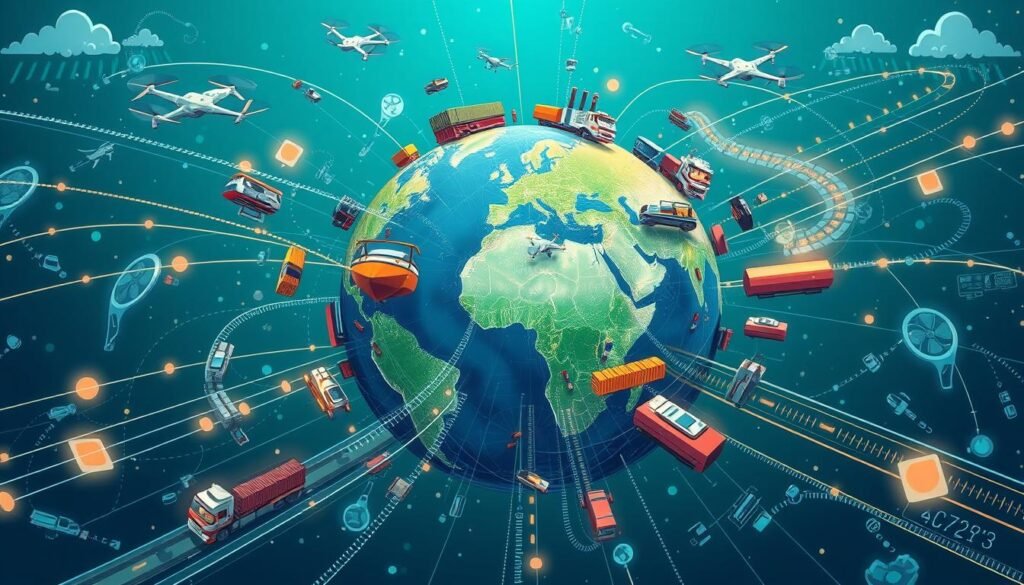
3. Ultra-Fast Delivery Rakes the Bar For LogisticsConsumer expectations for speedy delivery are growing. Delivery on the same day is becoming more common in cities and the battle to close the gap between receipt and order is driving significant investment into fulfilment infrastructure, small-scale warehouses located closer to demand centres autonomous delivery vehicles, drone delivery systems which are going from trial into operationalization in an increasing number of areas. Even for small retailers, meeting these requirements independently is becoming complex, which has resulted in the creation of fulfillment networks and third-party logistic providers who can provide investing in the infrastructure that is required. The environmental impacts of rapid delivery logistics are coming under increasing scrutiny alongside the commercial competition.
4. Recommerce And The Circular Economy Impact RetailThe market for second-hand, refurbished and second-hand items has been growing at a faster rate than new retail across many categories of products. Consumers' demand for lower prices, reduced environmental impact, also the desire to purchase products that are no more available as new is fueling the growth of peer-to?peer resale platforms, programmed re-sales operated by brands, and specialty resellers that specialize in fashion, electronics, furniture, and sporting products. Large brands have invested in resales and refurbishment strategies to maximize the value of secondary markets and to retain relationships with customers who are buying secondhand items over brand new. The stigma of purchasing used items in a variety of segments has gone away in young people.
5. Augmented Reality Can Reduce The Risk Of Online ShoppingOne of the major drawbacks of shopping online compared to physical stores has been the inability of evaluating an item prior to making a purchase. Augmented Reality is working to address this for specific categories with enough maturity to have an impact on purchasing behaviors and returns in a significant manner. You can try on eyewear, clothing and cosmetics in real-time, arranging furniture and accessories in a live room with the help of a smartphone camera and viewing products at the right dimension before making a purchase are all capabilities that are going from impressive demos regular features on the major platforms and brands' websites. The categories in which fit, size, as well as appearance in perspective are the most important factors are seeing the greatest impact on returns and conversion.
6. Subscription Commerce reaches beyond the convenience of a single transactionSubscribership models in online commerce have advanced beyond the simple concept of regular replenishment of consumables. The most profitable subscription options for 2026/27 are founded on curation, community and ongoing value which justifies regular payments instead of the lock-in mechanics which were used in earlier models. Consumers have become remarkably proficient in assessing the worth of subscriptions and cancellation rates penalize subscriptions that rely on the inertia of their customers instead of a real benefit that is ongoing. For retailers the economics of subscriptions, such as higher values over time, predictable revenue and stronger customer relationships can be compelling if the underlying value proposition is compelling enough to garner the trust of customers.
7. Cross-Border E-Commerce Grows And ComplexifiesThe ability to purchase at any time in the world has resulted in huge opportunity for the market, but it also presents operational hurdles in the area of customs charges, returns, localisation and consumer protection regulations. It is becoming more popular as both consumers and retailers extend their reach over domestic markets, yet the complexity of regulations is growing as well, with more countries implementing digital service taxes and product safety rules, and consumer rights rules that apply globally-domiciled sellers. The retailers succeeding in cross-border market share are those who have made a serious investment in the localisation, compliance infrastructure and logistical capabilities that true international retail needs.
8. Voice And Conversational Commerce Find Their Use for CasesVoice-based retail, long thought of to be a revolutionary medium, which was never able to meet the expectations it is gaining popularity in specific, well-defined instances. Reordering commonly purchased consumables making items available for shopping lists, and monitoring order status are just a few situations where a voice interface offers an unmatched convenience over screen-based alternatives. Artificially-powered chat assistants, that operate via chat interfaces, rather than using voice, are showing to be more flexible, assisting consumers to make difficult decisions about purchases by comparing options, and receive personalized recommendations in dialog formats that work better when it comes to purchasing items rather than traditional search and browse.
9. Sustainability Claims Are More Critical And RegulationConsumer interest in the sustainability and ethical aspects of online purchases is very high, but also is the skepticism of the claims about sustainability that companies make. Greenwashing regulation is tightening significantly in all major markets. There are conditions for solid claims, precise labelling, and transparency about the practices used in supply chains that can make ambiguous sustainability marketing legally risky. Retailers who have made real environmental improvement to their operations and supply chains are noticing that demonstrable and authentic sustainability credentials are now an important business differentiation to the growing group of customers who are prepared to act on their stated environmental priorities when credible information is available to justify their choices.
10. Payment Innovation Continues To Reduce FrictionThe checkout experience, historically among the top sources of abandonment of the basket in E-commerce, continues to grow by way of payment innovation, which decreases friction at the last and most crucial stage of the purchase process. Buy now pay later has gotten more sophisticated and is under greater scrutiny from regulators about costs and transparency. Digital wallets are now the default payment method to pay for increasing amounts for online transactions. It is replacing passwords and card details entering throughout a wide range of situations. One-click transactions, embedded purchases within apps and social platforms, and the continued expansion of banking-based payment options open to the public are all contributing to a checkout experience which is more efficient, faster, secure which means that you are less likely be able to lose a customer at the last moment.
The future of e-commerce is more sophisticated, more competitive and more impactful for the broader retail sector than at any previous point. These trends suggest an upward direction in the retail industry that rewards retailers who make a serious investment in customer experience, operational efficiency, and genuine value-creation over those relying on category monopolies, information imbalances, or lock-in mechanisms that consumers are increasingly adept at identifying and avoiding. The online shopping landscape is still changing rapidly and the distance between the present and where it's likely to be in the next five years will be just as shocking in comparison to the distance already travelled. To find further info, head to a few of these reliable lyonvision.fr/ to read more.
 Report this wiki page